General health information
How do melasma and freckles differ?
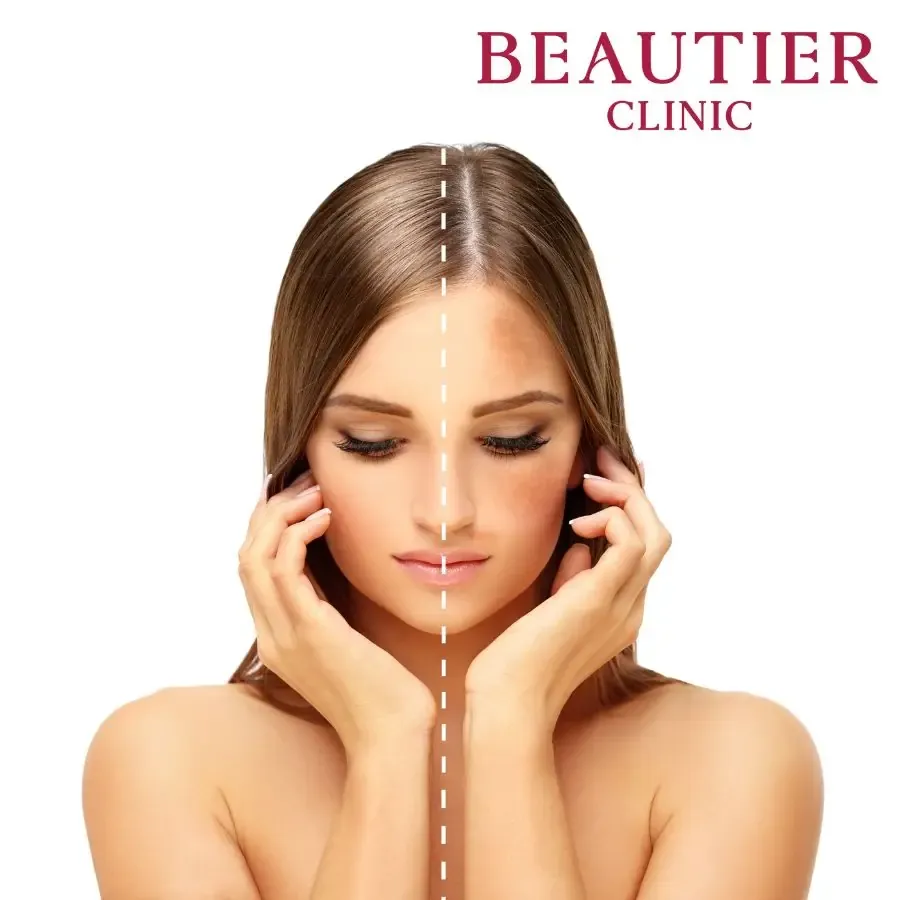
Melasma usually appears as facial patches, commonly on the cheeks, forehead, chin and upper-lip area. Related factors include sunlight, genetics and hormones such as oral or injected contraceptives and pregnancy.
Freckles and sun-related spots can appear in several patterns: defined brown sun spots, small light-brown freckles, small grey-brown dermal spots over both cheekbones, or raised brown-to-black lesions.
Goals of melasma, freckle and dark-spot care
- Distinguish the pattern before selecting a program
- Address uneven-looking tone and dark spots
- Match the program to the skin and area
- Maintain sun protection to reduce a major trigger
BEAUTIER PROGRAMS
Melasma programs at Beautier Clinic
The clinician considers the type and pattern of melasma, skin sensitivity, previous care and triggers before selecting or combining a program.
Beautier Clinic Signature Program
A four-step program arranged for melasma, freckles and dark spots.
- The formula contains amino acids, more than 8,000 peptides, more than 1,400 enzymes and naturally occurring compounds
- The formula concept addresses the pigment pathway associated with tyrosinase
- Products and sequence follow the pigment pattern and skin sensitivity
Program steps
- 01
Aqua Peeling cleanses the skin and removes surface residue
- 02
Vitamin-delivery treatment prepares the skin
- 03
Beautier Clinic signature procedure selected after assessment
- 04
Targeted mask for melasma, freckles and dark spots
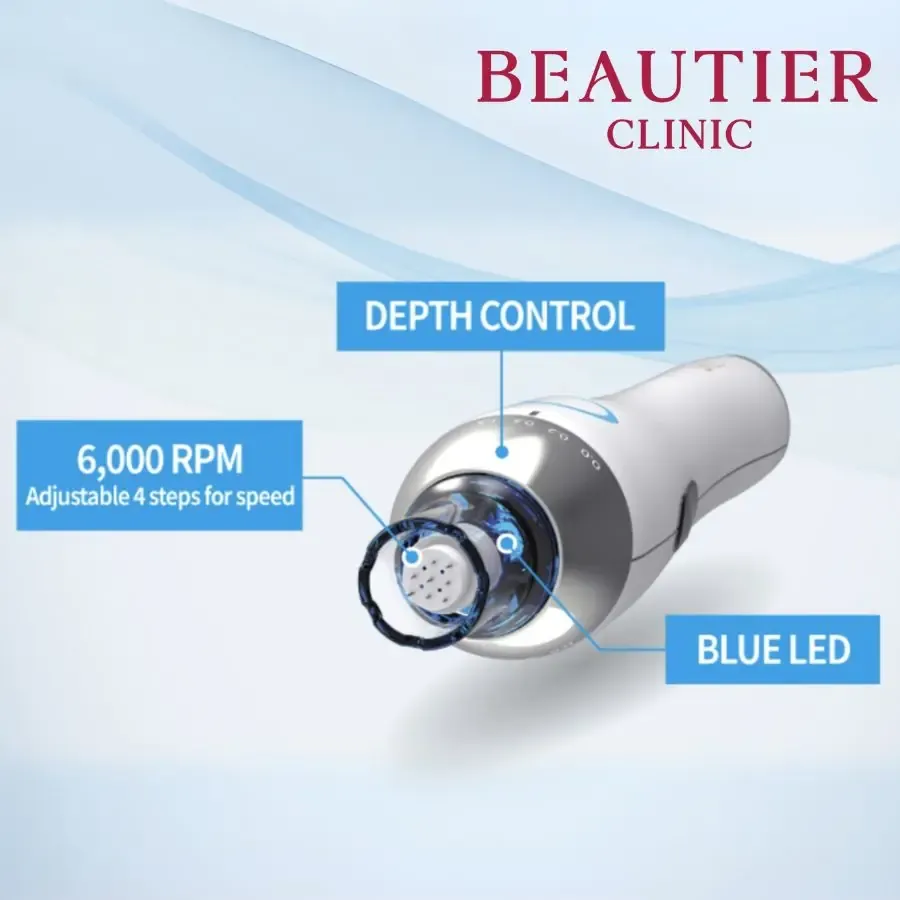
Microneedling Pen + Melasma Clearing Serum
A microchannel program supporting natural skin-repair processes, paired with Melasma Clearing Serum selected for the pigmentation pattern.
- Adjustable needle depth of approximately 0.5–2.0 mm
- Adjustable speed from 3,000–6,000 RPM
- Integrated blue LED light
- Serum goals include melasma, freckles, dark spots, uneven tone and dull-looking skin
- Depth, speed, serum and sequence are selected individually
Melasma Clear Treatment
A program using tranexamic acid within a plan for melasma, freckles and dark spots, with product testing for sensitive skin.
- Tranexamic acid is considered for pigment pathways associated with tyrosinase, arachidonic acid and prostaglandins
- Concentration, delivery and suitability are selected medically rather than standardized for everyone
- UVA/UVB protection and follow-up remain part of recurrence management
Program steps
- 01
Aqua Peeling cleanses the skin
- 02
Preparatory treatment conditions the skin
- 03
Tranexamic-acid step selected within the medical care plan
- 04
Targeted mask completes the program
Melasma can recur. Light protection and consistent follow-up remain important parts of care.
General health information
Who should begin with an assessment?
Our medical team reviews the pattern, location and related factors before recommending one of the clinic’s melasma programs.
- 01
Patches on the cheekbones, forehead, chin or upper-lip area
- 02
Sun spots, freckles, dermal freckles or dark spots
- 03
Uneven tone that becomes more noticeable with sunlight
- 04
Melasma or freckles that have returned after previous care
General health information
Assessment and program selection
Beautier Clinic offers a four-step signature program, Microneedling Pen with Melasma Clearing Serum, and Melasma Clear Treatment. Selection follows the type of mark, skin condition and sensitivity.
01 — Identify the mark
Review whether the concern resembles melasma, a type of freckle or another dark spot, including its location and colour.
02 — Review related factors
Discuss sunlight, family pattern, hormone or contraceptive use and pregnancy.
03 — Select and follow the program
Explain the relevant steps, monitor the skin response and reinforce sun protection to help reduce recurrence.
General health information
Preparation and recurrence prevention
Before the program
- Share previous care for melasma, freckles and dark spots
- Share hormone-related factors such as contraceptive pills, injections or pregnancy
- Sensitive skin should be patch-tested before the selected product is used
Sun protection
- Avoid sunlight as much as practical and use a hat or umbrella outdoors
- Choose sunscreen protecting against UVA and UVB with SPF 50 or higher
- Use about two finger lengths of cream sunscreen, or roughly one to two ten-baht-coin amounts for a fluid or lotion
- Reapply sunscreen every two hours during outdoor activity